
Behind the Lens | HERA Magazine International

Photography doesn’t always go according to plan.
Sometimes the weather refuses to cooperate, the lighting isn’t quite what you imagined, and the equipment you’ve brought along can only do so much.
But that’s part of the enjoyment of photography. Learning to work with what you’ve got, making decisions as you go, and occasionally discovering that a little patience in post-production can make all the difference.
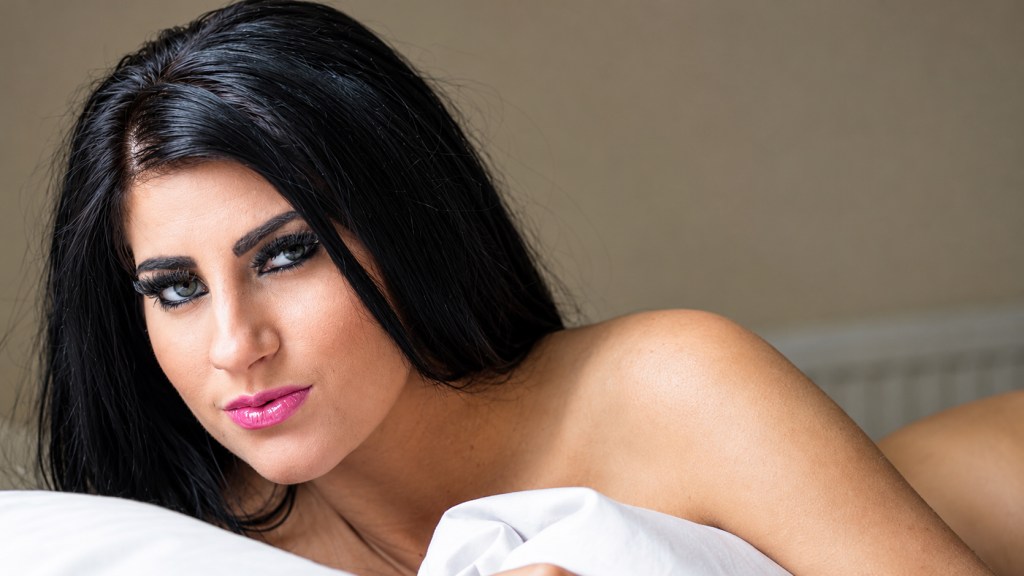
For this particular shoot, the model was Lacey, a confident brunette with striking features, expressive eyes and a natural ability to pose.
And the lighting? Well, that was another matter entirely.

Getting to Know Lacey
One of the pleasures of photographing people is getting to know them beyond the camera.
Lacey was a great conversationalist, particularly when it came to music, and she had a genuinely good sense of humour. That made for an enjoyable atmosphere throughout the shoot.
More importantly, she was confident in front of the lens.
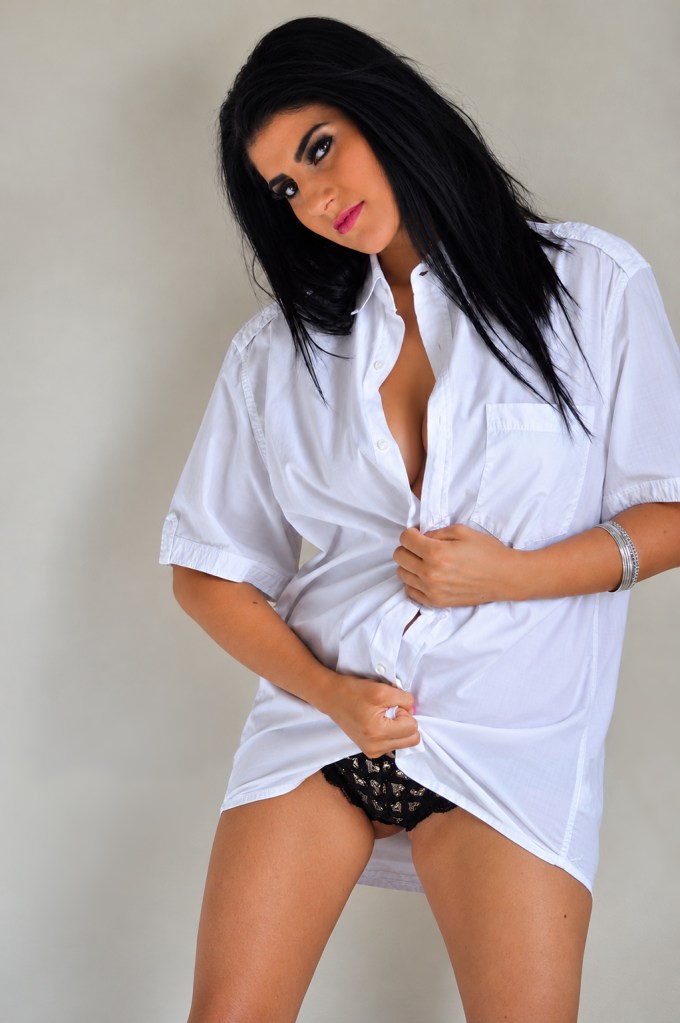
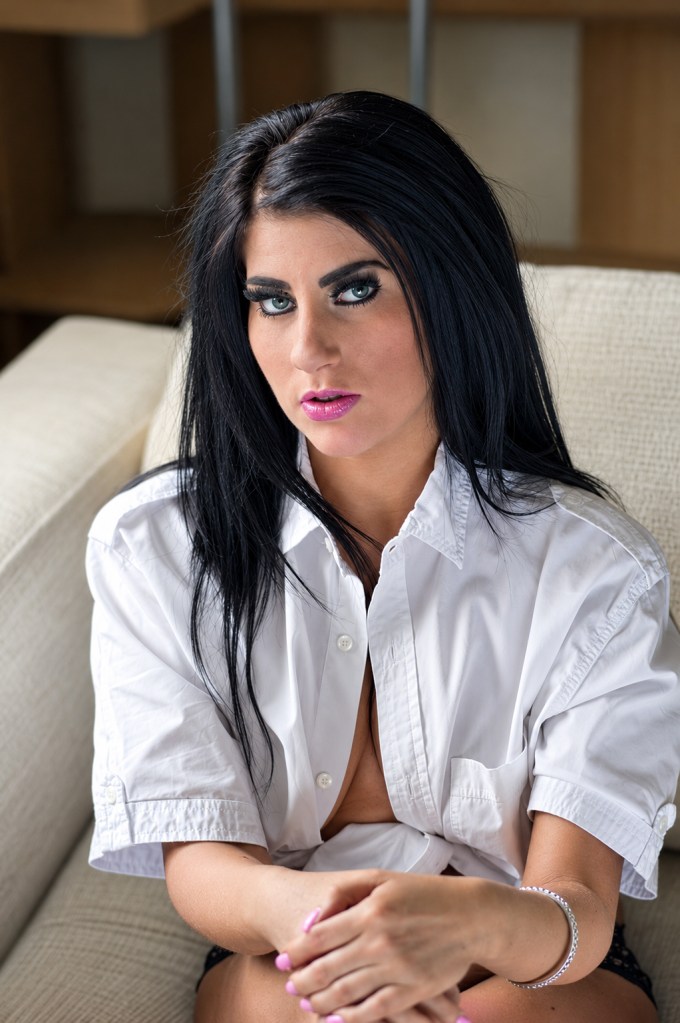
Her poses were strong and deliberate, and she understood how to use her expressions and body positioning to create different looks. From the classic simplicity of a white shirt to the slightly edgier styling of a leather jacket, she brought plenty of variety to the session.
As a photographer, that’s always something you appreciate. When a model is comfortable posing, you can concentrate on finding the right angles, framing the image and making the most of the available light.
Which, on this particular day, was easier said than done.



Fifty Shades of Grey — And Not the Interesting Kind
I’d decided to photograph Lacey using natural light rather than studio flash, with a two-metre Lastolite reflector to help redirect some of the available illumination.
Unfortunately, the British weather had other ideas.
It was an overcast day. No blazing sunshine, no dramatic shafts of light streaming through the windows. Just an almost indelible greyness.
There are advantages to overcast conditions. Cloud cover acts as a giant diffuser, softening the sunlight and reducing the harsh shadows that direct sunshine can produce.
However, soft light isn’t necessarily exciting light.
Without a strong directional source, photographs can sometimes lack contrast and definition. And although a reflector can help illuminate darker areas, it can only work with the light that’s available in the first place.
A two-metre Lastolite Reflector is a substantial piece of equipment, but even that can’t manufacture sunshine on a grey day.

The Advantage of Consistency
There was, however, one distinct advantage to the lighting conditions.
They were consistent.
When working with manual studio flash, I would normally need to establish the exposure, take test photographs and adjust the lighting output or positioning until I achieved the result I wanted.
With natural light, I could see how it was falling on Lacey before pressing the shutter.
And because the sky remained overcast, the overall illumination was relatively steady throughout the session.
Admittedly, it wasn’t consistently brilliant.
In fact, it was consistently not brilliant!
But that predictability meant I could spend more time concentrating on Lacey’s poses, expressions and composition, rather than repeatedly adjusting flash equipment.
There was a certain freedom in that.
Of course, it also meant accepting that some of the photographs would need additional attention afterwards.
Why Shooting in RAW Matters
One of the decisions that proved particularly useful was photographing the session in RAW.
Unlike a standard JPEG, which has already undergone processing and compression in the camera, a RAW file retains more of the information captured by the sensor.
That gives the photographer greater flexibility when adjusting exposure, white balance and tonal values during processing.
This doesn’t mean RAW files can perform miracles. If a highlight is completely blown out or a shadow contains no usable information, no amount of editing can recreate detail that was never recorded.
But when the information is there, RAW processing can make a significant difference.
Looking through Lacey’s photographs afterwards, I found that some of the darker areas needed attention. The natural lighting had produced an uneven balance in places, and details that were present in the files weren’t always immediately apparent.
This was where Photoshop CS4 became particularly useful.

Bringing Back the Detail with Curves
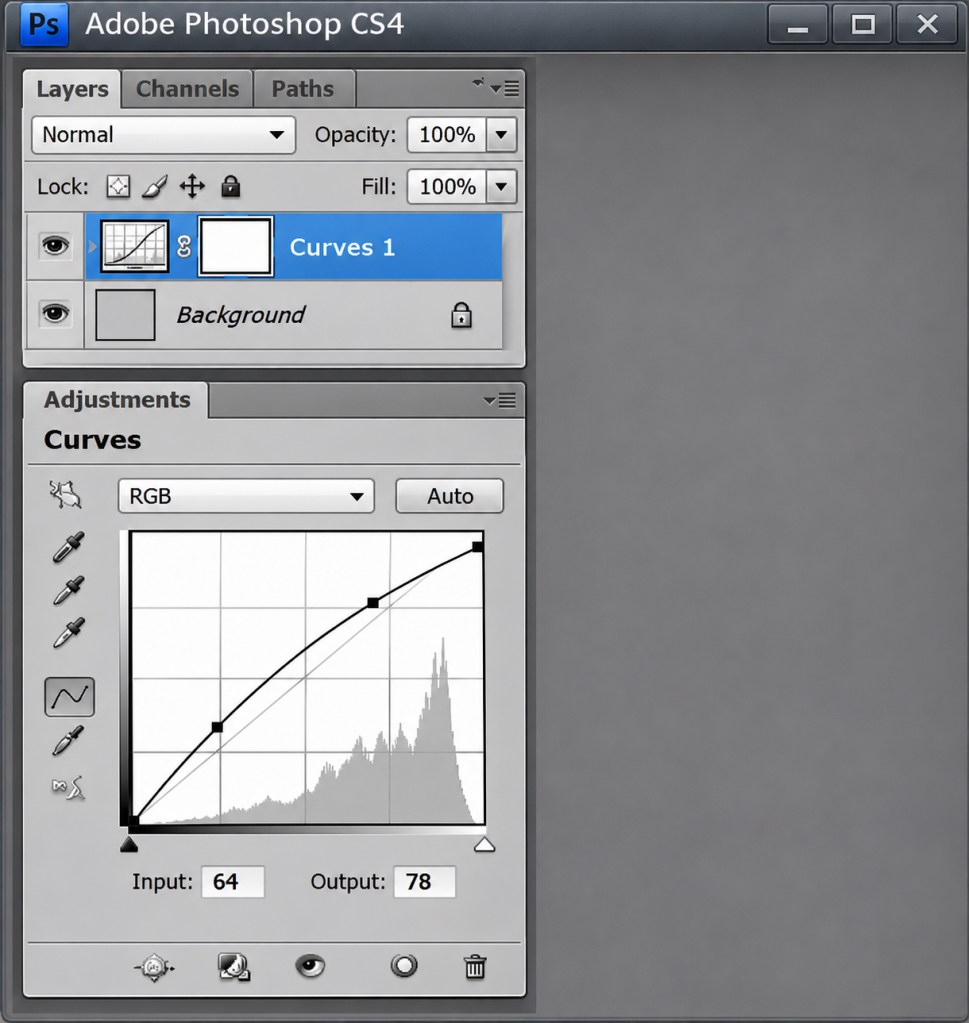
One of the tools I used during processing was Photoshop’s Curves adjustment.
Curves provides control over the tonal range of an image, allowing the photographer to adjust shadows, midtones and highlights without simply increasing the brightness of everything at once.
By lifting parts of the curve corresponding to darker tones, I could brighten selected tonal ranges and reveal detail in areas that initially appeared too dark.
The challenge was to do this without losing the contrast that gave the photographs their character.
Push the adjustment too far, and an image can begin to look washed out. Leave the shadows untouched, and some of the detail remains difficult to see.
As with so much in photography, the answer lies somewhere in the middle.
The aim wasn’t to transform the lighting into something completely different. It was to make the most of the information already captured and produce a balanced, natural-looking result.
It’s also worth remembering that post-production isn’t necessarily about correcting mistakes. Sometimes it’s simply the final stage of making the photograph you had in mind when you pressed the shutter.
Combining AI with Traditional Editing
Over the years, I’ve developed a fairly familiar routine when it comes to processing portraits.
Normally, I’d use frequency separation in Photoshop, a technique that allows me to work on skin texture and underlying colour and tonal variations separately. I’d then use the Dynamic Skin Softener filter from the Nik Collection to refine the result.
It’s a process that gives me plenty of control, but it can also be time-consuming, particularly when working through an entire collection of photographs.
For Lacey’s shoot, I decided to incorporate AI-assisted editing instead.
What interested me was how quickly AI could achieve a broadly similar result to my traditional workflow. It wasn’t necessarily doing anything I couldn’t already accomplish using frequency separation and the Nik Collection, but it could significantly reduce the time spent on repetitive adjustments.
Of course, the two approaches aren’t technically identical. Frequency separation offers precise manual control, while AI-assisted tools make many of those decisions automatically. Both can produce pleasing results, but neither removes the need for a photographer’s judgement.
Once the AI-assisted processing was complete, I brought the photographs back into Adobe Photoshop CS4 for some additional minor adjustments.
The final step was applying an Unsharp Mask.
Despite its slightly misleading name, Unsharp Mask is a sharpening technique that increases local contrast around edges, helping details appear more clearly defined. Applied carefully, it provides that final touch of crispness without making the image look overly processed.
For me, AI hasn’t replaced traditional photographic editing. It’s simply given me another option.
And when the end result is comparable, but one method takes considerably less time, that’s certainly worth exploring.


Strong Poses, Simple Styling
Despite the technical challenges, Lacey brought a great deal to the photographs.
The white shirt provided a classic, uncomplicated look, allowing the emphasis to remain on her expression, hair and posing.
Against the relatively neutral background, the combination of dark hair and white fabric created its own contrast, even when the natural light wasn’t particularly dramatic.
The leather jacket introduced a different mood, giving the collection a little more edge and variety.
Throughout the session, Lacey’s confidence was a real asset. Her ability to hold a pose and change her expression helped create a series of images that felt connected without becoming repetitive.
And sometimes that’s all a shoot really needs: a model who enjoys being photographed, a photographer willing to experiment, and enough flexibility to adapt when circumstances aren’t quite ideal.

What the Shoot — and the Editing — Taught Me
Looking back, there are things I might approach differently.
Additional controlled lighting could have given me more flexibility, particularly when trying to create separation and definition in the photographs.
But using natural light also had its advantages.
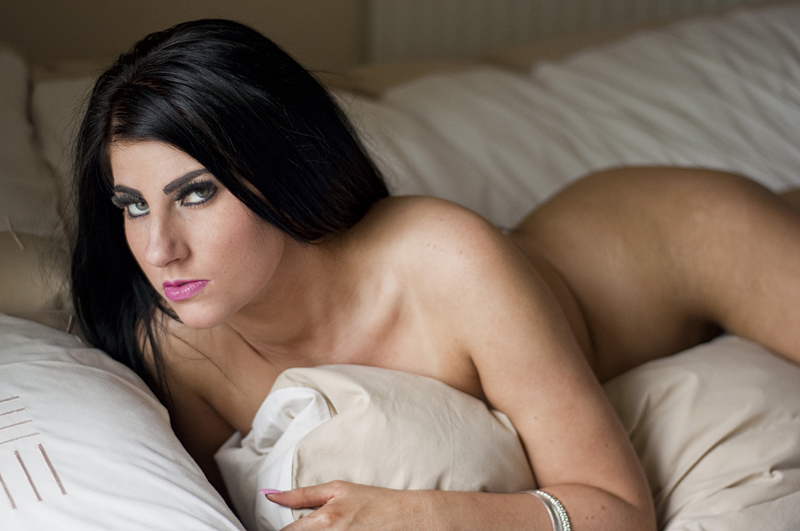
The lighting was soft, predictable and visible before each exposure. The reflector helped where it could, and shooting in RAW gave me the flexibility to refine the photographs afterwards.
Curves helped me bring out details in darker areas, while AI-assisted editing provided another stage in the process. Returning to Photoshop CS4 for the final adjustments and sharpening allowed me to finish the photographs the way I wanted.
Most importantly, I was able to concentrate on working with Lacey rather than becoming completely absorbed in the technical side of the session.
Photography is often presented as a process where everything is carefully planned, every light positioned perfectly, and every image captured exactly as intended.
Sometimes it works that way.
Other times, you get an overcast British day, a large reflector and a model with a great sense of humour.
And you make the most of it.
Final Thoughts
The finished collection is a reminder that successful photography isn’t always about having perfect conditions.
It’s about recognising what works, understanding what doesn’t, and knowing how to use the tools available to you.
Lacey brought confidence, personality and strong posing to the shoot. The natural light brought a few challenges, and the combination of RAW processing, Curves, AI-assisted editing and traditional Photoshop techniques helped me work through them.
Together, those elements produced a collection of portraits that I’m pleased to share.
Sometimes the photographs that require a little extra thought are the ones that teach us the most.
Thank you to Lacey for an enjoyable shoot, some excellent conversation and for bringing her personality and confidence to the photographs.
Photography and editorial: HERA Magazine International


Leave a Reply