
From college darkrooms to the Northern Lights of Norway, photographer and graphic designer Gareth Wyld explores the beauty of experimentation, collaboration and those unexpected moments that make photography special.
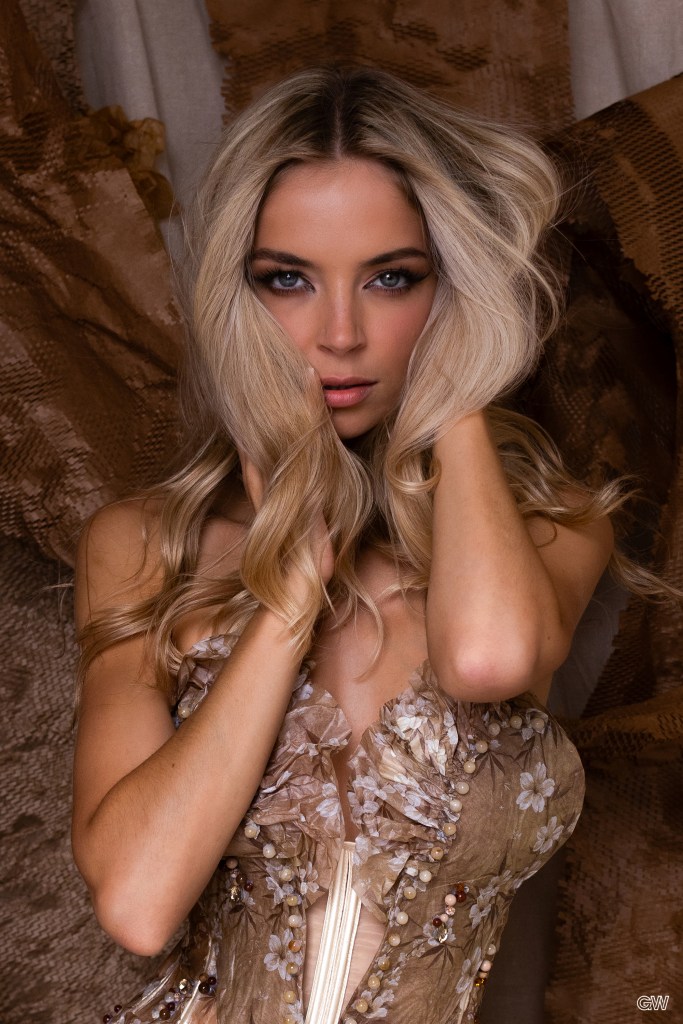
Model: Lucia (@lucianeedham)
Studio / Stylist: Studio Luminescence (@studioluminescence)
Where Creativity Meets Curiosity
For some photographers, the perfect image is the result of meticulous planning. For others, it’s a fleeting moment of inspiration, a happy accident or simply being in the right place at the right time.
For Gareth Wyld, it can be a little of everything.
A photographer and graphic designer with an eye for composition, colour and atmosphere, Gareth’s creative journey began in a college darkroom, where he discovered the satisfaction of developing his own photographs by hand.
Since then, his camera has accompanied him from the streets of New York to the landscapes of Northern Norway, while his portrait and fashion photography has allowed him to explore an entirely different side of his creativity.
What makes Gareth’s approach particularly interesting is his willingness to experiment. Moodboards, lighting ideas and careful planning all play their part, but he’s equally happy to change direction when an unexpected opportunity presents itself.
And while modern photography can sometimes feel like a relentless pursuit of technical perfection, Gareth believes that the real magic often lies in something less predictable: the emotion, atmosphere and little moments that make a photograph memorable.
HERA Magazine International caught up with Gareth to discuss his photographic journey, his creative influences, working with models, the beauty of imperfection and one extraordinary night beneath the Northern Lights.
The HERA Interview
HERA: Let’s start at the beginning. How did you first become interested in photography? Was it something you’d always wanted to explore, or did you discover it almost by accident?
Gareth: At college, I had the opportunity to study a GCSE-equivalent photography course alongside my design studies.
This allowed me to take photos, hand-process the film, create contact sheets, select, edit and develop the final images in the darkroom.
Being hands-on, this was something I really loved, and I spent many lunchtimes in the darkroom at the time.
University gave me some amazing opportunities for wonderful photographs, now with my own SLR, at a residential in the Lake District and abroad in Florence. If I remember rightly, there were eight rolls of film from that trip.
Moving to Nottingham, we had in-house photographers at the design agency, so I was often called upon to be part of the team out on location, often helping art-direct the shoot and, of course, carry the equipment.
Since then, various opportunities to travel have prompted me to add to, or replace, an item of kit to maximise capturing what I may see.
A Canon Ixus for street photography in New York; a Canon 80D for capturing the America’s Cup World Series boats in Sweden; and the Canon R7 I now have for my last two trips to Northern Norway.
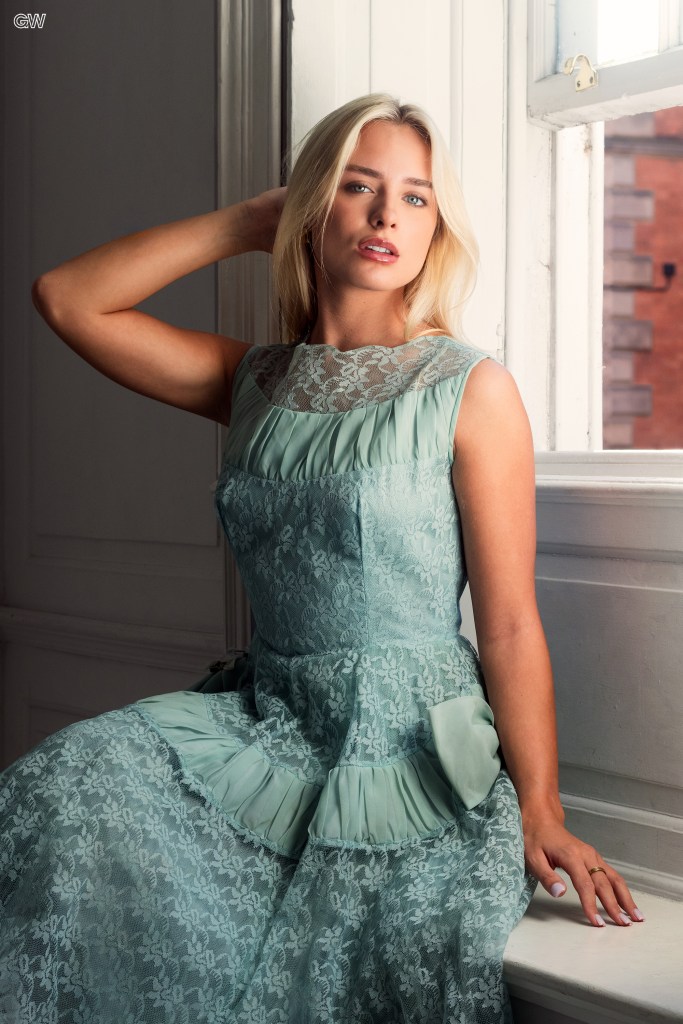
Model: Elle S (@elle.stone_fl)
Studio: The Boardroom Studio (@theboardroom.studio)
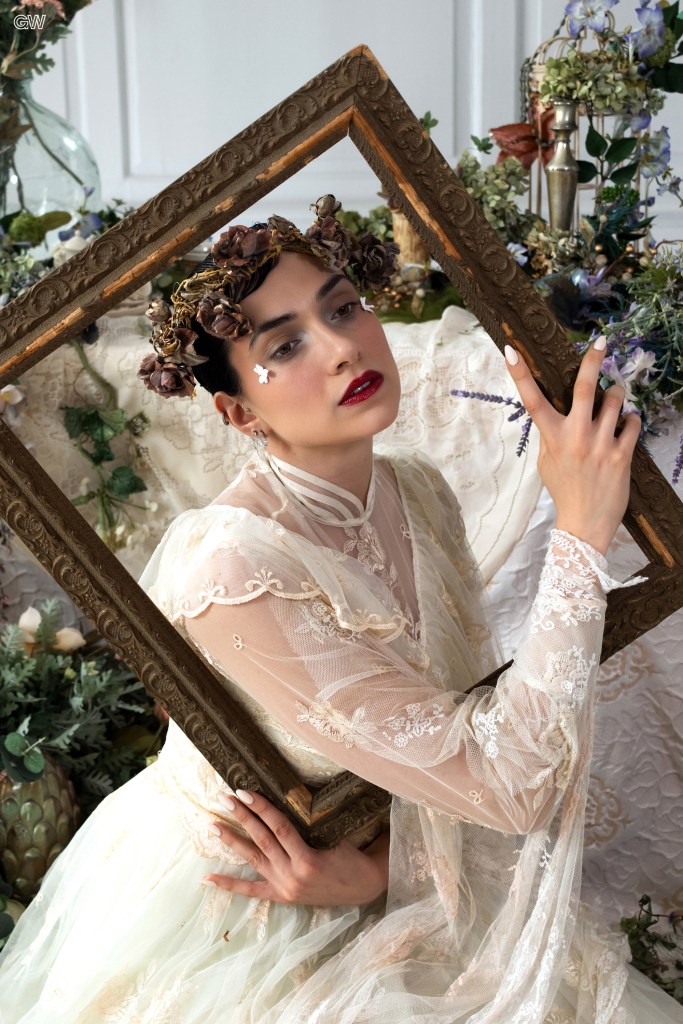
and
Model: Xenia (@xeniamodel_official)
Studio: The Boardroom Studio (@theboardroom.studio)
Event: Imagination Emporium (@theimaginationemporium)
HERA: You’re also a graphic designer. Do you think your design background influences the way you approach photography, particularly when it comes to composition, colour and creating a particular atmosphere?
Gareth: Every image has a starting point, a thought and an idea.
If anything, sometimes it means I can overthink the process, so I tend to initially plan with moodboards and share them with the model beforehand.
They can then get an understanding of the themes, poses and lighting I am aiming to achieve at the photoshoot.
Planning goes a long way towards helping to ease my mind so I can focus more clearly. I can go a little overboard with the ideas sometimes, but it’s better to have a few more than too few.
Something I do tend to think about when shooting is leaving a little more space around the subject.
It particularly helps when certain platforms prefer different crops, and you may wish to show one image differently on, say, Instagram rather than for a physical print.
I also lean towards colours that are cohesive and work together, creating a palette that’s complementary to the mood or style I’m going for.
I’m certainly not a fan of jarring colours and often prefer slightly muted tones.
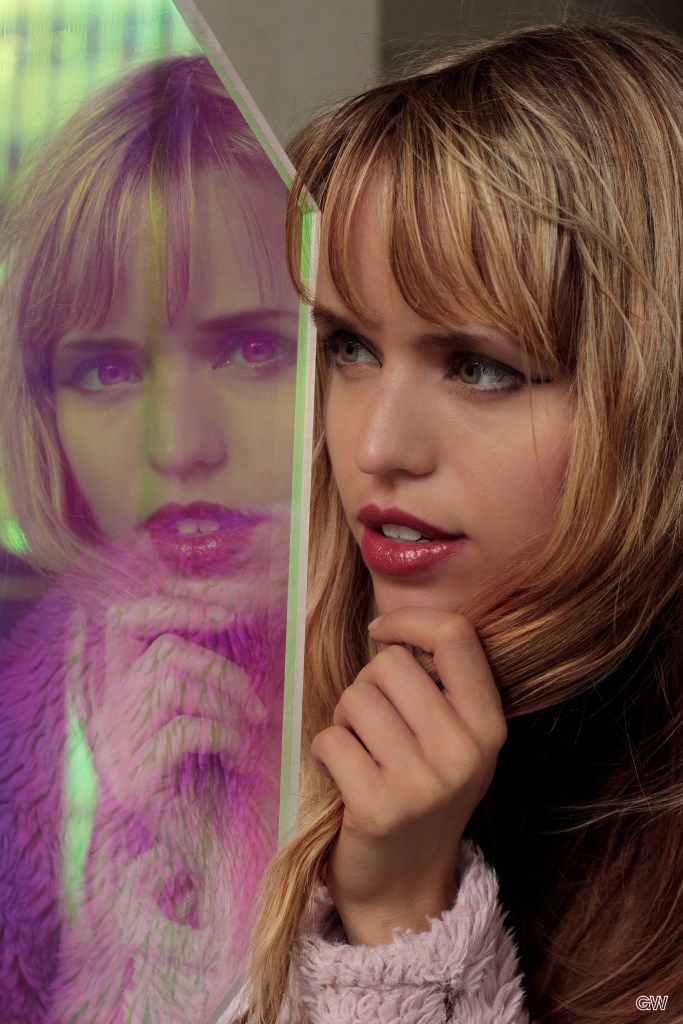
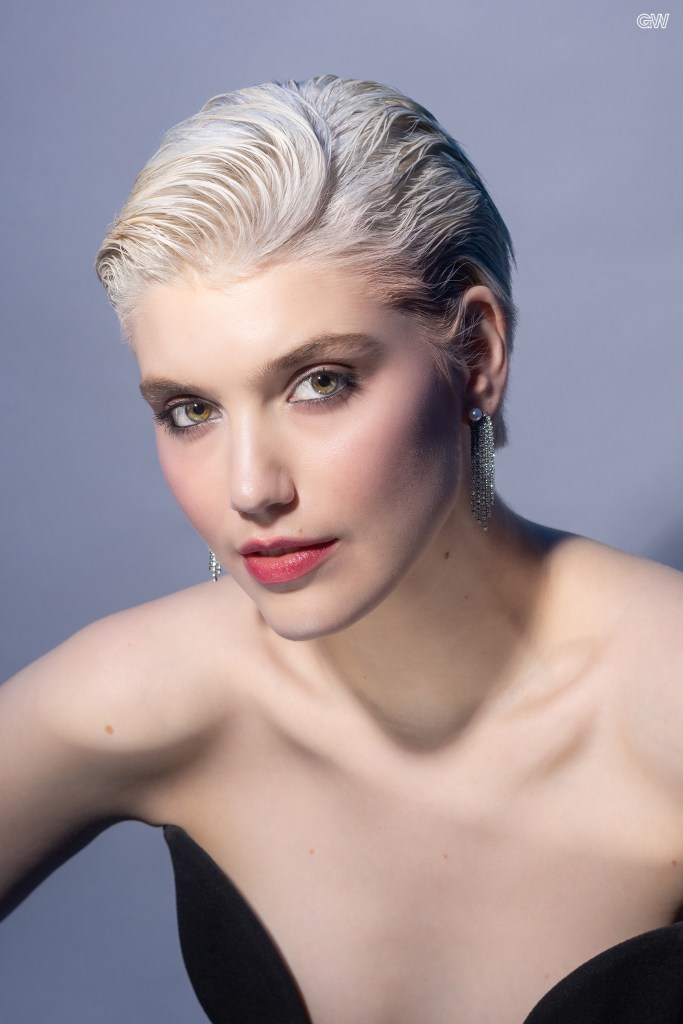
Model: Angel (@angel_white_model)
Location: Barbican, London
and
Model: Emily (@emily_masseyy)
Studio: Zavod Studio (@zavodstudiouk)
HERA: Looking through your portfolio, there’s a lovely variety of styles, from natural-looking portraits to carefully styled fashion photography. Do you have a particular style you enjoy shooting most, or do you prefer experimenting with different ideas?
Gareth: I enjoy all aspects and experimenting with various ideas and themes.
For portraits and fashion, it all starts with the model, a plan and the location.
Landscape and other shoots, like architectural and street photography, are about looking for the location, interesting angles and uncommon viewpoints.
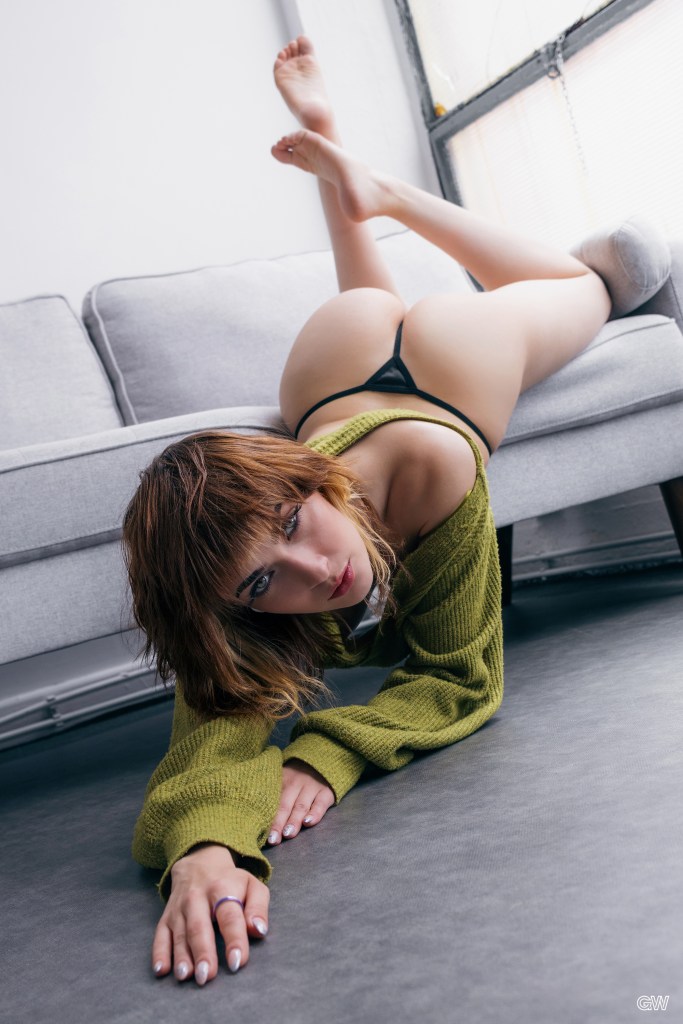
Model: Ellie Mae (@ellmae_ig)
Studio: Zavod Studio (@zavodstudiouk)
HERA: Lighting can completely transform a photograph, and it’s something that really stands out in your work. How do you approach lighting a shoot? Do you tend to plan everything beforehand, or do you enjoy experimenting once you’re working with a model?
Gareth: When it comes to lighting, I’m very much influenced by other people’s work and will often think, maybe I can use this lighting idea in an upcoming shoot.
Thankfully, I know some great people, studio owners and assistants, who will help me to set up something that I’ve seen or an idea I have in my head.
Not everything will work out as planned, and more often than not, that is for the better, because trying things out and seeing how changing things affects the result helps you find the best outcome.
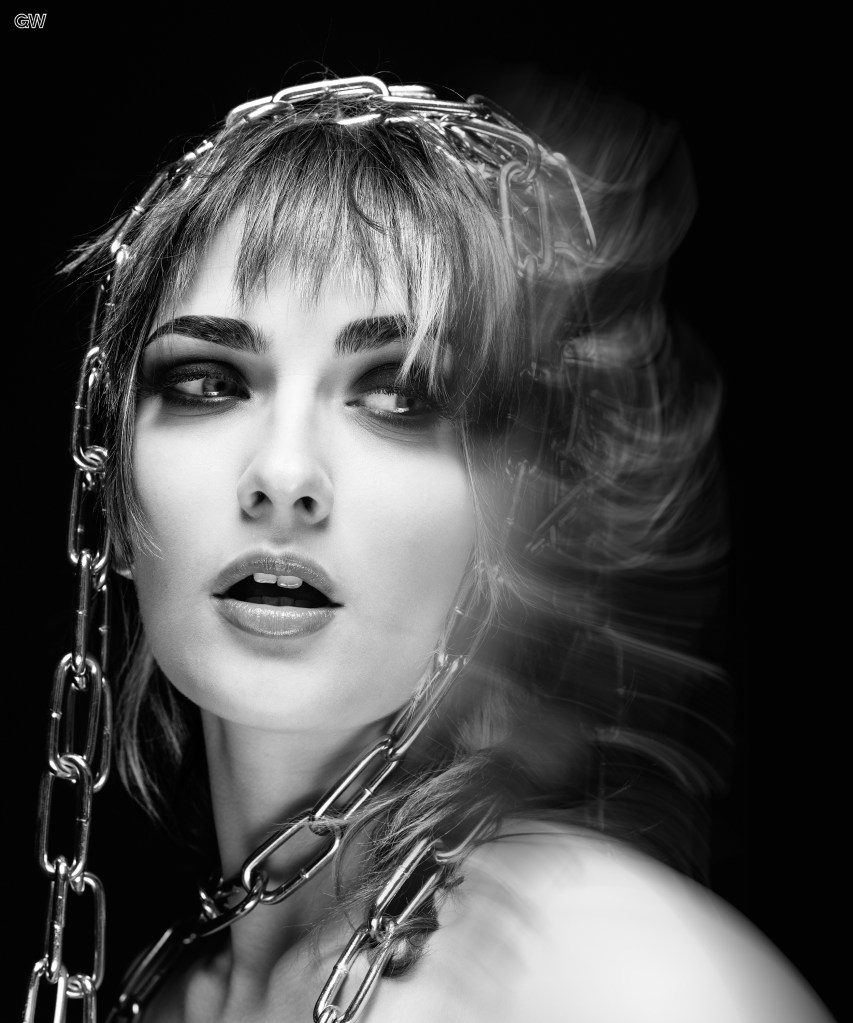
Model: Ellie Mae (@ellmae_ig)
Studio: Zavod Studio (@zavodstudiouk)
HERA: Here’s one for the photographers reading! What’s your go-to camera and lens combination, and what lighting equipment do you find yourself reaching for most often? Is there a particular piece of kit you simply wouldn’t want to be without?
Gareth: To be honest, I don’t have a massive amount of kit myself.
I currently have a Canon R7 and three lenses.
A Sigma RF 10–18mm f/2.8 DC DN, which I bought specifically for my last trip to Norway for the landscapes and Northern Lights; a Canon EF-S 24mm f/2.8 for inside small studios, street and some architectural work; and the EF 50mm f/1.4, which most people would say is the one I naturally steer towards for my portrait work.
I have a reflector and a Speedlite, but I’ve only used that once or twice.
I was gifted a digital grey card a while back, and that’s always in my bag. An absolute winner for light casts and colour correction.
HERA: Working with models is very much a collaboration. What do you think makes a really successful photographer–model relationship, and how do you help someone feel comfortable and confident in front of your camera?
Gareth: A lot of the people I’ve worked with, I’ve quite often spoken to on social media for a while beforehand, some considerably longer than others before a shoot.
I think you need to be able to know if you’re going to be a good fit for the photoshoot together. Not everyone is suited to working together, and that is fine.
I get nervous before a shoot, so a couple of times, arriving early, I’ve been able to grab a coffee with the model or studio owner beforehand, and that has certainly helped me feel more comfortable.
If the model, or indeed anyone else involved in the shoot, has an idea to improve something, I’m always happy to change or adapt.
I find if everyone has some input into the shoot, you all feel more empowered and inspired to create, bouncing ideas off each other.
And music helps cut out silence. A little background music always helps.
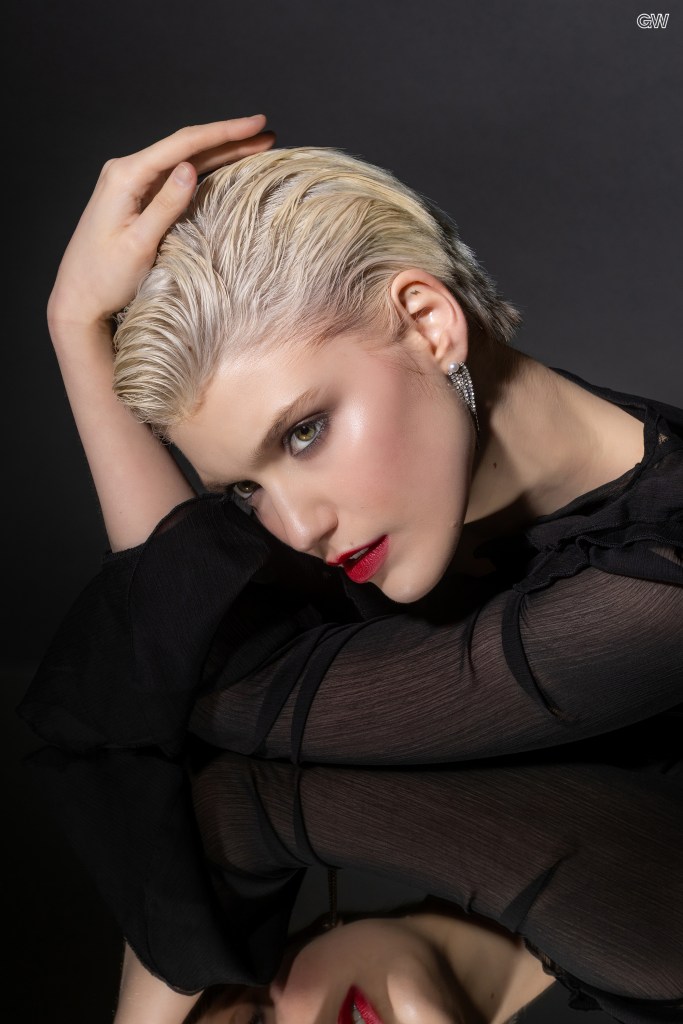
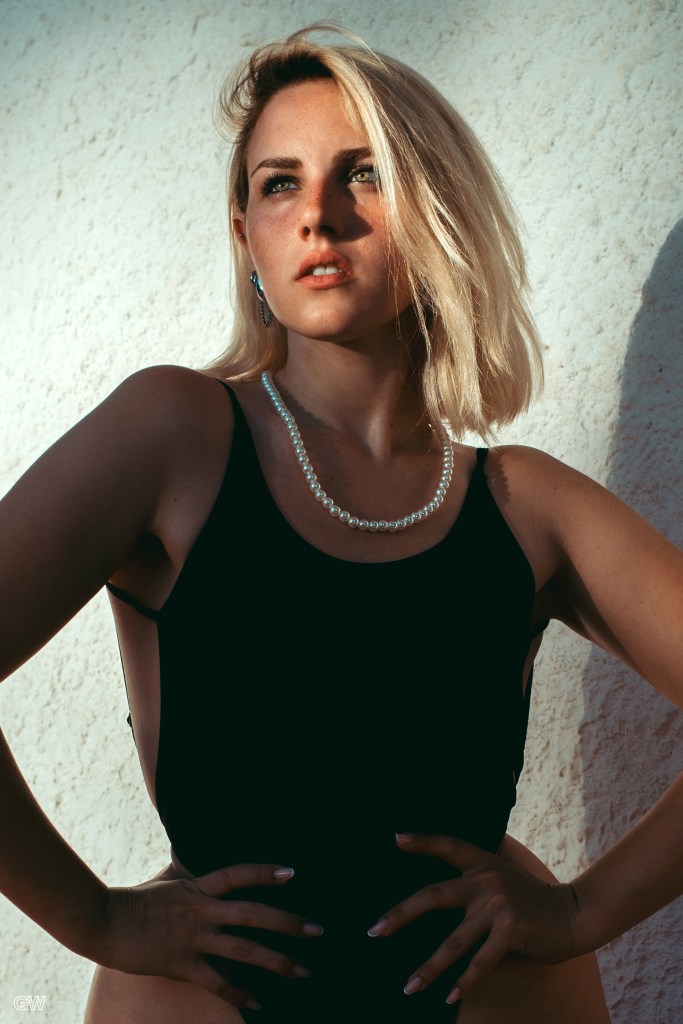
Model: Emily (@emily_masseyy)
Studio: Zavod Studio (@zavodstudiouk)
and
Model: Giulia (@giuliabianchinii)
Location: Sicilia
Event: Imodelita Sicilian Affair (@imodelita)
HERA: Every photographer has experienced shoots where things haven’t quite gone to plan. Have you ever had a situation where an unexpected problem or change of circumstances actually resulted in a better photograph than you’d originally imagined?
Gareth: I had a moodboard with quite a number of experimental ideas for a lingerie shoot, which I shared with a model.
Alongside it, there were a few other ideas on the sheet, but nothing really finalised or overworked, for the “if we have time” kind of shots.
I hadn’t really specified any particular outfits to bring along, as I left that up to the model’s choice.
The studio we were to shoot in was part of a still-working factory, and upon arrival, we were shown around some amazing communal areas that we could shoot in.
Unfortunately, the model had only brought lingerie for the main ideas and nothing else as an alternative, so we wouldn’t have been able to shoot in those additional places.
Fortunately, she arrived in a beautiful dress she could wear, allowing us to capture some wonderful shots.
Another was on a scouting trip for a second location for a photoshoot in London.
With time running out rapidly, I sat on a bench, dejected, wondering what on earth I was going to do.
After turning a corner to head towards the Tube station, I stumbled across the most beautiful ruins intermixed with new, yet weathered, construction.
It turned out that some of my favourite images of the day came from that location, and a sculpture in Perspex added at a later date became another happy accident for the model to interact with.
HERA: Social media has made photography more accessible than ever, but it can also bring criticism and pressure to produce perfect images. Do you think photographers sometimes become too focused on technical perfection rather than the feeling or story behind a photograph?
Gareth: I guess it would be wonderful to get that technically “perfect” image.
But art is largely subjective, and a perfect image for one person is not always going to be the same for another.
I’ve heard of photographers changing lenses and whole camera systems in order to get the consistently sharp images they crave.
On my last photoshoot, some were so sharp that they actually started to look fake, as if I’d cut the person out.
If I’m honest, a few out-of-focus images help my culling, and although some I wish were sharper, I want to capture not perfection but something else, more wonderful: the overall feeling of the shoot.
And sometimes that is a slight smile, candid and natural, or a happy dance caught between images.
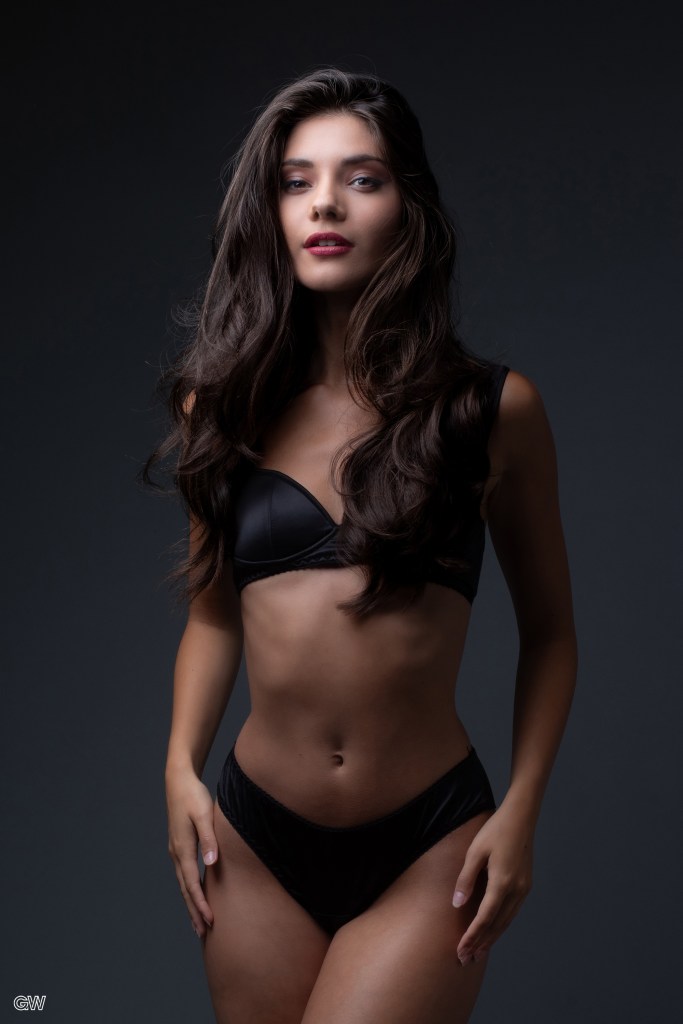
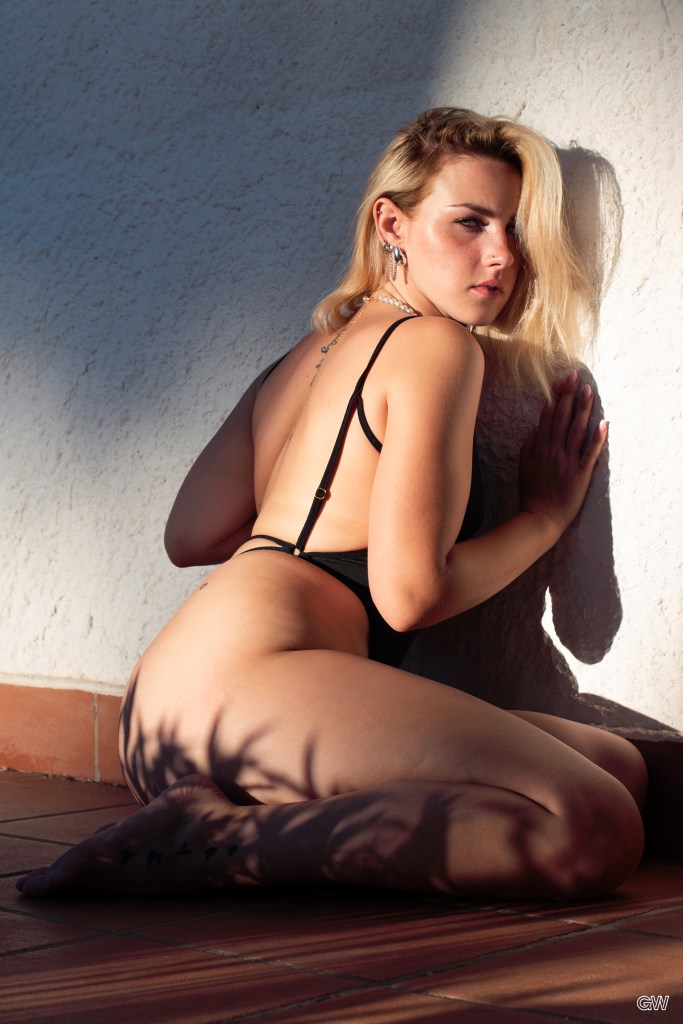
Model: Elle B (@ellebaldwinson)
Studio: Studio Luminescence (@studioluminescence)
and
Model: Giulia (@giuliabianchinii)
Location: Sicilia
Event: Imodelita Sicilian Affair (@imodelita)
HERA: When you look back through your work, is there a particular photograph or shoot that means something special to you? It doesn’t necessarily have to be your most technically accomplished image, just one that you’re especially proud of or that brings back good memories.
Gareth: There are a number of firsts in photography that I’m still very proud of, because I think you look back on those warmly as the achievements that they are.
And there are the shoots when, doing a quick review on the back of the camera, you see something that really makes you realise what you’ve just helped create.
Currently, the photograph of the Auroral Expansion back in March would be one of the most special images I’ve taken.
It was at the end of the night, heading back over the border from Finland to Norway, and our group was only one of four that evening to see it.
To quickly unpack the kit, have the focus points corrected, the exposures correct, be in the right place at the right time, and share the experience with my mum, who was also there on the trip, was very special.
I’ve a few other aurora images that I’ve taken that I’m proud of, albeit standing alone on a rock out on the coast past midnight, but that one is certainly the most impressive.
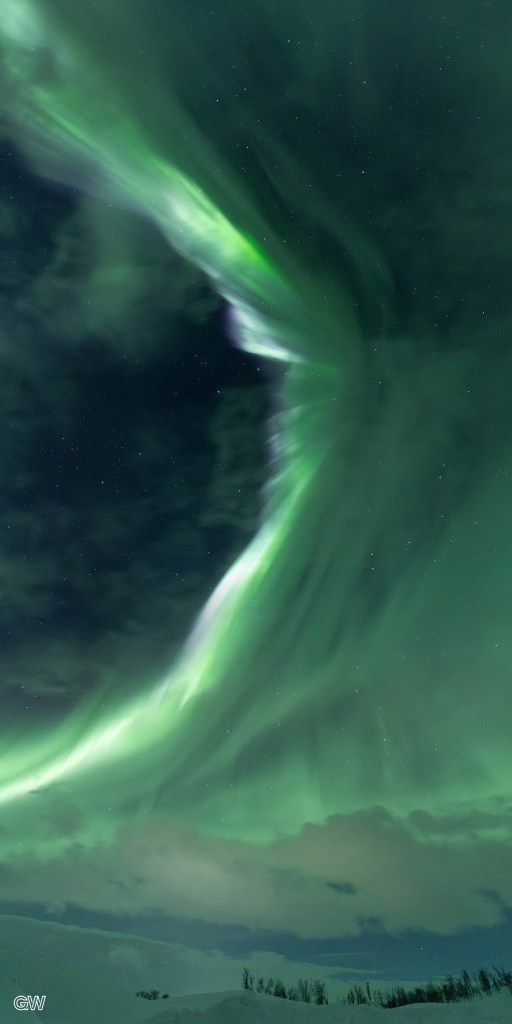
Auroral Expansion — Northern Norway
Photography: Gareth Wyld
HERA: Finally, what’s next for Gareth Wyld? Are there any photographic ideas, locations, creative collaborations or personal projects that you’d particularly love to explore in the future?
Gareth: I’ve got four unusual film stocks for some creative analogue experiments, ready to use on the right shoot.
One will take me out of my comfort zone, as it’s a very garishly coloured stock.
And I’d like to combine some more art and design into my work, one idea of which has been sitting on my desktop for a good 18 months, waiting for the right image to work with.
I have so much inspiration saved, possibly too much, that I feel a little suffocated by the vast amount I’ve collated at times.
Concepts, make-up ideas, outfits, lighting choices and location ideas.
There are also so many people I’d love to work with in the future, some I’ve worked with in the past, some I hope to in the future.
And then there is the wonder project, the holy grail.
Well, only time will tell.
I guess we’ll just have to wait and see.
The Beauty of the Unexpected
There’s something wonderfully refreshing about Gareth Wyld’s approach to photography.
He appreciates careful planning, understands the importance of composition and lighting, and draws upon his graphic design experience to create photographs with a distinctive atmosphere.
But he’s equally aware that some of the most memorable images are the ones that weren’t planned at all.
A dress that unexpectedly becomes the perfect outfit for a location. A forgotten corner of London that turns into an extraordinary backdrop. A fleeting smile or spontaneous moment that captures more personality than any carefully rehearsed pose.
And then there’s that remarkable night beneath the Northern Lights, when preparation, timing and a little good fortune came together to create an image Gareth will always treasure, made even more special because his mother was there to share the experience.
Perhaps what makes his story so engaging is that, despite his experience, Gareth still approaches photography with the curiosity of someone who loves discovering what might be possible.
He doesn’t seem particularly interested in chasing perfection for its own sake.
Instead, he values the creative process, the people involved and those wonderful moments when everything unexpectedly falls into place.
And with unusual film stocks waiting to be explored, new collaborations on the horizon and a mysterious photographic holy grail still to pursue, it seems Gareth’s creative journey has plenty of exciting chapters left to come.
With Special Thanks to Gareth Wyld
HERA Magazine International would like to extend our warmest thanks to Gareth Wyld for taking the time to share his experiences, creative insights and photographic journey with our readers.
From those early days spent developing film in a college darkroom to capturing the extraordinary beauty of the Northern Lights, Gareth’s enthusiasm for photography shines through in every answer.
We particularly appreciate his openness about the creative process, the importance of collaboration and the fact that even experienced photographers sometimes feel nervous before a shoot.
It’s been a genuine pleasure getting to know the photographer and the person through his words, and we look forward to seeing where his creativity takes him next.
Photography: Gareth Wyld
HERA Magazine International


Leave a Reply