
From the adrenaline of motorcycle racing to the quiet poetry of empty streets, one photographer explores how light, place and human experience shape the images we remember.

Photography can begin with the pursuit of a decisive moment: a split second on a racetrack, a fleeting expression, or the perfect alignment of light and movement. But sometimes, the most interesting journeys are the ones that lead us somewhere entirely unexpected.
For this photographer, a career that began documenting the speed and intensity of motorsport has evolved into something more contemplative. Today, his work encompasses studio portraiture, landscapes and urban environments, exploring the atmosphere of a place and the stories that remain when the immediate action has passed.
That evolution has been shaped by significant changes in his life, but also by a growing interest in what photographs can communicate beyond their immediate subject. His approach places particular importance on lighting, composition and the relationship between photographer and subject.
Perhaps most strikingly, his work also explores photography’s capacity to address difficult human experiences. A deeply personal project examining homelessness challenged him to consider not only how people are photographed, but how their dignity, identity and stories can be represented with care.
In this conversation with HERA Magazine International, he reflects on his photographic evolution, the importance of trust and light, the relationship between capturing an image and interpreting it, and what it takes to move beyond technical competence towards meaningful visual storytelling.
From the Racetrack to the Studio
HERA: How would you describe your photographic style, and how has it developed over time?
My photographic style is rooted in observation, atmosphere and a quiet attention to the emotional life of places and people.
My photography began in motorsport, covering road racing on the Isle of Man and Oliver’s Mount, along with British F1 and F2 sidecar racing at circuits around the UK.
That environment taught me fast decision-making, anticipation, technical precision and how to work under pressure. It also taught me to look for narrative in movement: a rider’s line through a corner, the tension before a start, and the relationship between machine, rider and landscape.
Being made redundant, followed by leg surgery, forced a significant change in both my working life and my physical relationship with photography.
I moved away from the pace and physical demands of trackside shooting and towards studio work and landscape photography. At first, that shift was practical; over time, it became creative.
The slower rhythm allowed me to spend longer with a subject, refine light more carefully and think more deeply about what an image was communicating.
Although the subject matter changed, the underlying concerns did not. Motorsport taught me to recognise decisive moments; studio and landscape work taught me patience.
Today, my style combines those influences: an eye for movement and timing, alongside a quieter interest in stillness, mood and the emotional weight of a place.
Painting with Light
HERA: How important is lighting to your work?
Lighting is fundamental to my work. It is not simply a technical means of exposure; it shapes mood, directs attention, reveals texture and often determines whether an image feels intimate, dramatic, mysterious or quietly observational.
In the studio, lighting is my friend. It creates atmosphere, tells a story, adds detail and sometimes introduces intrigue.
I enjoy the control it gives me. I can sculpt a face with a single directional source, use shadow to withhold as much as the light reveals, or build a more complex setup to establish a particular emotional atmosphere.
On location, my approach changes. Rather than imposing light on a scene, I work with what is naturally available and wait for the decisive moment.
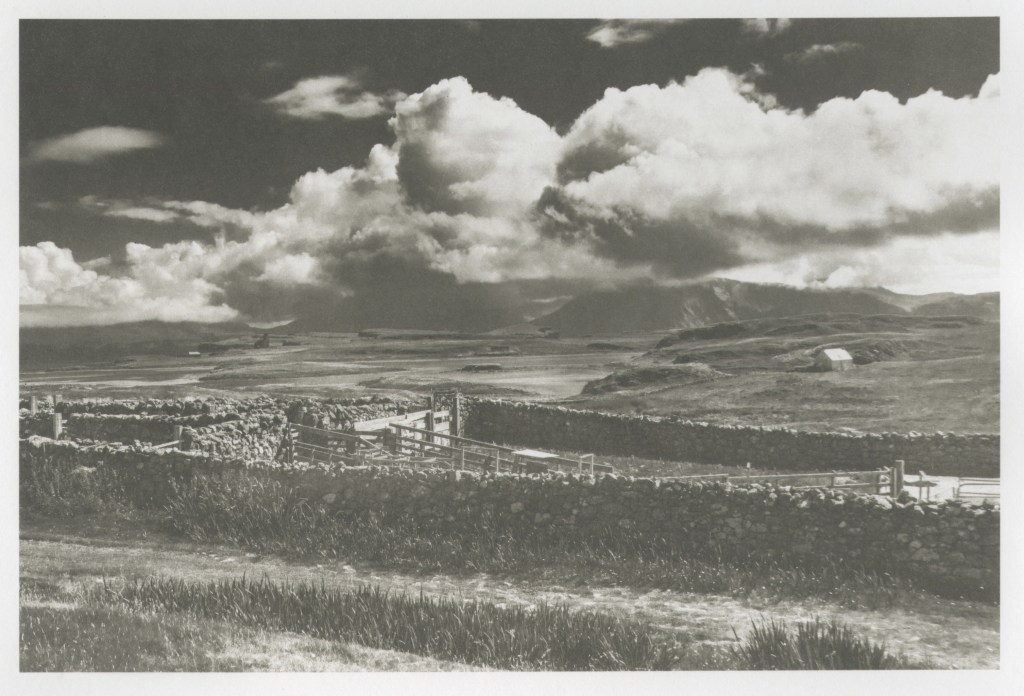
Natural light has a truthfulness that I value. Early morning mist, low winter sun, overcast skies or the fading light at the end of the day can transform a familiar place into something more contemplative.
I don’t see studio and natural light as opposing methods. The studio gives me control; the landscape and urban environment give me chance, patience and discovery.
In both, the aim is the same: to use light not just to illuminate a subject, but to give the photograph atmosphere, meaning and a sense of story.


The Human Connection
HERA: When photographing people, how do you build enough trust and rapport to capture genuine expressions?
Trust is built before the first frame. Make the person feel seen, safe and in control of the encounter. Genuine expression usually follows once the camera stops feeling like an evaluation.
I begin by introducing myself and explaining why I want to photograph someone, including how the images may be used.
I put the camera down at first. We talk about something ordinary, and I listen properly rather than simply waiting for my chance to shoot.
During the session, I let people settle before directing them. I use small, concrete prompts rather than abstract instructions, and I encourage collaboration.
Showing someone a strong frame early can build confidence. It gives them reassurance that they’re being represented respectfully.
Often, the most truthful photographs appear towards the end of a session, when things become quieter and less directed.
The underlying principle is respect. Treat the sitter as a collaborator with a story, not simply as material for an image.


Capturing the Moment, Creating the Image
HERA: How much of a successful photograph happens in-camera, and how much comes from post-production?
A successful photograph is usually mostly made in-camera, but post-production determines how fully that potential is realised.
For most intentional photography, I would suggest roughly 70–80% capture and 20–30% finishing, although that balance shifts depending on the genre.
The exposure decides what information exists: light, shadow, focus, motion, depth, colour temperature and, most importantly, composition.
If the decisive gesture, expression or arrangement of forms isn’t present in the file, editing cannot invent it convincingly.
In post-production, you interpret the capture through exposure balance, contrast, white balance, local light, colour relationships, cropping, retouching and mood.
A documentary photograph has a stronger ethical obligation to preserve the evidential character of a scene, whereas a fine-art image may use post-production more aggressively.
The photograph is conceived in-camera, completed in post, and judged by whether both serve the same intention.

Photography, Dignity and the Value of a Life
HERA: What has been the most challenging photographic project you’ve undertaken?
The most challenging project I undertook was my Final Major Project for my BA (Hons). It was also the most personally consequential.
The project began from the idea that we are all one life event away from homelessness.
A redundancy, bereavement, illness, relationship breakdown, eviction or accident can place anyone outside the security they had assumed was permanent.
Rather than photographing homelessness as a distant social category, I wanted to make portraits that acknowledged the ordinary and complex lives behind that label.
The difficulty was not technical. It was ethical and emotional.
I had to earn enough trust for people to allow me to represent them, while resisting the temptation to turn their circumstances into visual spectacle.
Before photographing anyone, I volunteered at a soup kitchen. I spoke with participants about the project, how the images would be used and what they did or did not want revealed.
The participants were to be identified by their historical professions, preserving anonymity and giving them control over aspects of their backgrounds.
Those previous roles included service members, merchant marine, construction and science.
I printed the portraits using the platinum–palladium process.
This was a deliberate juxtaposition. Platinum–palladium prints use precious metals embedded within the paper fibres and are valued for their tonal range and exceptional archival permanence.
By using one of photography’s most durable and materially expensive processes to portray people whose housing security is fragile, I wanted the work to ask a question:
Whose lives do we consider worth preserving, commemorating and looking at carefully?
The project taught me that a photograph is not only an image but an ethical relationship made visible.
I learned to slow down, listen before directing and accept that consent, dignity and collaboration matter as much as composition.
Photography in the Age of AI
HERA: With smartphones, computational photography and AI changing image-making, what distinguishes a genuinely good photographer today?
A genuinely good photographer today is not the person who can outperform a phone’s default algorithm at sharpness, exposure or even focus.
It is the person who brings intention, judgement and a credible relationship to reality to images that anyone can now produce quickly and attractively.
Smartphones have made competent-looking images nearly automatic.
There is still a real difference between a dedicated camera and a phone, but it isn’t simply that one is legitimate and the other is not.
A dedicated camera offers more direct control over optics, exposure, depth and the experience of composing through a viewfinder.
But the phone is also a legitimate photographic instrument, particularly when immediacy, discretion or mobility matters.
The better question is not ‘real camera or phone?’ but which tool best serves the kind of attention you want to give the subject.
A phone can optimise the picture. It cannot decide why this frame matters.
The Artists Who Shape the Eye
HERA: Which photographers or creative influences have had the greatest impact on your work?
Bob Carlos Clarke is an important reference for his highly stylised, often provocative black-and-white imagery.
His photographs combine dramatic lighting, theatrical staging and a strong interest in texture, mood and print quality.
His work is a reminder that a photograph’s visual character is shaped not only when it is taken, but also through printing and finishing.
Jean-Christophe Gobitta offers a different approach. His monochrome work is softer, more contemplative and focused on the human form, natural light and restraint.
George Hurrell, meanwhile, helped define the visual language of Hollywood glamour.
His portraits demonstrate the power of sculptural lighting, precise posing and carefully controlled shadows.
Studying these photographers reveals different approaches to the same fundamental challenge: how to create an image that communicates something beyond its subject.


Beyond Technical Perfection
HERA: What advice would you give someone who wants to move beyond taking technically good photographs and begin creating meaningful images?
If I could give only one piece of advice, it would be this: learn your camera well enough to stop thinking about it, then use that freedom to make photographs about something you genuinely care about.
Technical competence is the foundation, but it isn’t what makes an image memorable.
A technically clean photograph becomes memorable when it has a clear subject, a reason for being made and enough human or visual tension for the viewer to feel something.
This doesn’t require expensive equipment. A modest camera used with intention will outperform expensive gear used without a point of view.
Before shooting, finish this sentence: ‘This photograph is about…’
It might be solitude, transition, class, memory, isolation, resilience or a single person’s dignity.
Then ask whether the frame actually communicates that idea.
The real shift is from asking, ‘Did I expose this correctly?’ to asking, ‘Does this photograph need to exist, and will anyone remember why?’
Most of all, if you are not working to a brief:
‘Shoot for yourself, not for others.’
Closing Thoughts
What emerges from this conversation is a reminder that photography is as much about curiosity, patience and human connection as it is about equipment or technical skill.
From the split-second decisions of motorsport to the deliberate stillness of a platinum–palladium portrait, his journey demonstrates how a photographer’s perspective can evolve while retaining a consistent interest in the world and the people within it.
For HERA, it is a particularly valuable reminder that a memorable photograph does more than show us something.
It gives us a reason to look again.
With Thanks to Derek
HERA Magazine International would like to extend its sincere thanks to Derek of DDGlamourShoots for taking the time to share his experiences, insights and photography with us.
What makes conversations like this particularly rewarding is the opportunity to discover the person behind the camera: not simply the techniques they use or the images they create, but the experiences, values and creative decisions that shape their work.
Derek’s openness in discussing his journey, including its challenges and the deeply personal projects that have influenced his photography, has made this a particularly thoughtful and engaging interview.
We are equally grateful for his generosity in allowing us to share examples of his work with our readers.
Thank you, Derek, for trusting HERA with your story and your photographs. It has been a genuine pleasure to feature your work.
— The HERA Magazine International Editorial Team
Discover more of Derek’s photography: Follow @DDglamourshoots on Instagram.


Leave a Reply